
If you’re weighing a multi-unit commitment, that shift tells you a lot about what the next several years inside the system will look like.
Why Is Slim Chickens Focusing on Discipline Instead of Unit Count Alone?
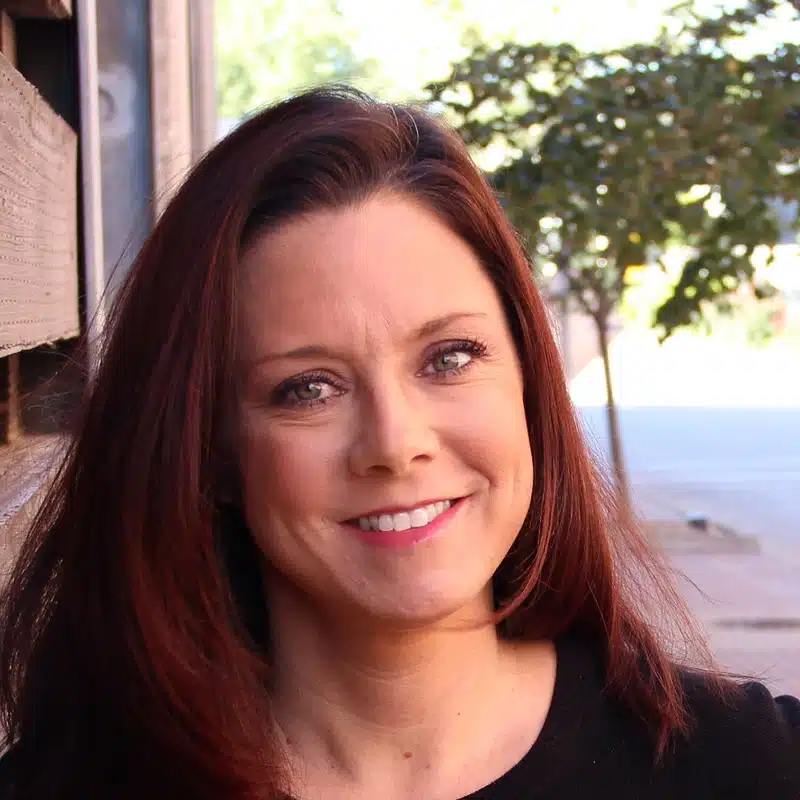
With hundreds of restaurants open, Slim Chickens now measures its growth by how well each restaurant performs. That’s how Christina Vaughan, President and COO of Slim Chickens, framed the brand’s next chapter in a March 2026 interview with QSR Magazine. She described the moment as an evolution. The brand is still growing quickly, but growing well now depends on operating discipline and franchisee performance, and she told the magazine she keeps “using the word discipline” because it’s what produces consistent results over the long run.
The pipeline explains why. QSR reported that Slim Chickens entered 2026 with more than 300 restaurants worldwide and more than 1,000 in development, with target markets spread across the Midwest, the Northeast and California along with international regions in Europe, Asia and the Middle East.
The 2026 Franchise Disclosure Document (FDD) gives the audited view. According to the financial statement notes in the 2026 FDD, Slim Chickens had 283 operating franchise locations as of December 28, 2025, had sold development rights for 770 additional locations with opening timelines running from 2025 to 2036 and had sold 57 more franchise agreements after that fiscal year closed. Franchised restaurants operate in 33 U.S. states and in the United Kingdom, Turkey, Germany and Malaysia.
The press figure and the FDD figure measure the pipeline at different points in time and in different ways. For due diligence, the FDD is the number to work from.
A pipeline that size raises the stakes on every opening. One underperforming restaurant affects more than its own owner. It shapes how guests see the brand in that market and affects the franchisees operating nearby. Leadership’s message in the QSR interview was that development stays a priority and every new unit has to be backed by strong execution at the restaurant level.
How Has Slim Chickens Grown Domestically Over the Last Three Years?
Item 20 of the 2026 Slim Chickens FDD tracks U.S. restaurants only. International franchised restaurants are excluded from these tables. Here’s the systemwide outlet summary for the last three fiscal years:
| Fiscal Year | U.S. Outlets at Start of Year | U.S. Outlets at End of Year | Net Change |
|---|---|---|---|
| 2023 | 148 | 183 | +35 |
| 2024 | 183 | 207 | +24 |
| 2025 | 207 | 215 | +8 |
The U.S. system grew by 67 restaurants across three years, and nearly all of that growth came from franchisees: company-owned restaurants held at 11 through 2024 and 2025. The pace of net additions also slowed in 2025, which any candidate reading Item 20 closely will notice.
Read the table alongside the brand’s stated focus on standards and operator fit. A good follow-up question for the franchise development team is how the brand decides when a market, a site or an operator is ready.
How Does Slim Chickens Use Benchmarking and Scorecards?
Slim Chickens uses system data to set clear performance expectations and to show each franchisee how their restaurants compare with their peers. According to the QSR interview, the brand has strengthened its scorecard approach so franchisees can see their own performance against the rest of the system, and it’s investing in Domo, a data platform that pulls financial and performance metrics into one place for both corporate and franchisees.
Vaughan told QSR that the brand uses data and benchmarking to be deliberate about the operators it grows with. In practice, that means expectations around labor, food costs and day-to-day execution are spelled out rather than left to each operator to figure out.
The results show up in prime cost. Prime cost is the combination of a restaurant’s food and labor costs, and it’s the largest set of expenses an operator controls week to week. QSR reported that leadership points to improvements in systemwide prime costs, and that those gains have helped franchise profitability. The next step, per the interview, is to keep giving operators the tools and clarity to perform consistently.
For a candidate, the difference is timing. Without peer benchmarks, an operator usually learns a restaurant is underperforming at the end of a quarter, after the money is gone. With a scorecard and shared data, a multi-unit owner can spot a labor drift or a food cost problem at one location and compare it against similar restaurants in the system while there’s still time to fix it.
None of this replaces an operator’s own judgment. It gives that judgment better information.
What Support Do Slim Chickens Franchisees Get as the System Grows?
Slim Chickens pairs clear standards with training before opening and more in-person support after it. The 2026 FDD lays out the pre-opening side in Item 11. Before a first restaurant opens, seven people complete the Slim Chickens Training Program: the franchisee’s Controlling Owner, the general manager, the assistant manager and four shift managers. Training takes place at the brand’s Fayetteville, Arkansas headquarters, at affiliate-operated restaurants in Arkansas and at select approved franchisee restaurants. The full program can run up to six weeks, shift managers follow a shorter two-to-three-week track and trainees must finish at least eight weeks before the scheduled opening date. Per Item 11, there’s no fee paid to Slim Chickens for the trainees attending for a first restaurant, though franchisees cover travel, living expenses and wages.
After opening, the QSR interview describes a support model built around three pieces:
- Defined standards. Franchisees get clear expectations on labor, food costs and execution, so everyone is measured against the same bar.
- Access to performance data. Scorecards and the Domo platform give operators the same view of performance that corporate sees.
- More field engagement. Leadership says it’s increasing in-person assessments and ongoing support at the restaurant level, and it continues to invest in training for franchisees and their teams.
The brand also relies on its franchise advisory council to collect feedback and give operators a voice in decisions, according to QSR. The FDD notes that Slim Chickens created a franchisee advisory board in 2015 that gives input on advertising programs; that board advises but doesn’t hold decision-making authority.
Vaughan’s view, as she put it to QSR, is that the brand benefits and grows when franchisees are profitable.
Who Is Slim Chickens Looking to Grow With?
Slim Chickens is prioritizing experienced operators who will focus on store-level profitability. In the QSR interview, Vaughan said the brand is watching new restaurants closely and setting them up for long-term success instead of chasing unit count.
That matches how the franchise development team describes its ideal candidate. The brand looks for proven multi-unit restaurant experience and operators who invest in their teams and their communities while still running to brand standards. Chief Development Officer Matthew Green has pointed to one factor above the rest: a strong, committed partnership between the people funding the restaurants and the people running them. Candidates who bring capital without operating experience, or who want to buy an asset without a long-term development commitment, fall outside the profile.
According to Item 7 of the 2026 Slim Chickens FDD, the estimated total initial investment for a single restaurant is $1,188,900 to $4,944,000. The range is wide because the FDD has to account for very different real estate situations, building formats and local construction costs. A candidate’s own number depends on the specific site.
For an experienced operator, the brand’s focus on fit works in their favor. A system that screens carefully for operator partnerships and monitors new restaurants is protecting the franchisees already in it, including the one who signs next.
Where Do Technology and Hospitality Fit in Slim Chickens Growth?
Slim Chickens treats technology as a tool for restaurant performance. Vaughan told QSR that technology remains a priority, especially where it improves visibility into performance and decision-making, and that every investment has to support profitability at the restaurant level.
On the guest side, the brand is working toward a smoother ordering experience across every channel, whether a guest orders at the counter, in the drive-thru or through third-party delivery. An updated mobile app was in the works at the time of the interview, aimed at making ordering simpler for guests.
The FDD shows how the system pays for this. Item 6 of the 2026 FDD describes a Technology Fee that funds systemwide technology investments, which may include the Slim Chickens ordering, delivery and loyalty app, mobile training and operational performance software, cloud-based franchise-management tools, e-learning and guest surveys. Item 8 requires all new restaurants to install and use the Brink point-of-sale system. Candidates should read both items for current terms.
Hospitality stays at the center. Leadership told QSR that digital tools should add to the guest experience while the human side of service remains essential. For a brand built on Southern hospitality, that balance is part of the product.
The same thinking applies to supply chain. Per the interview, the goal is to protect food quality while managing costs, a priority that’s grown more important as commodity prices move. Every investment, Vaughan said, needs to make restaurants stronger and more profitable.
How Can a Prospective Franchisee Test a Brand’s Growth Discipline?
Any franchisor can say it grows with discipline. A careful candidate can check. Here’s how to evaluate Slim Chickens, or any multi-unit concept, during due diligence:
- Read three years of Item 20. Look at openings, closures and transfers by year, and at the net change. Then ask the franchise development team to explain the trend in their own words.
- Read Item 11 closely. Note who must attend training, how long it lasts and how far ahead of opening it has to be finished. Requirements like these show how much the brand invests in a restaurant before it opens.
- Read Item 6 for technology costs. Understand what the Technology Fee covers and which systems you’ll be required to use.
- Ask to see the scorecard. Request a walkthrough of the performance reporting franchisees receive and how often they review it with the brand.
- Call current and former franchisees. The FDD lists them. Ask about field visits, how useful peer benchmarking has been and how the first year after opening went.
- Ask how the advisory council works. Find out how operators are selected, what topics it covers and one thing it has changed.
- Ask how new restaurants are monitored. Learn what happens when a new location falls behind its benchmarks in the first year and who steps in.
The chicken segment is crowded, with new entrants and established brands competing for the same guests and the same sites. Leadership told QSR that Slim Chickens plans to stand out through menu variety, a flexible franchise model and simpler operations, with execution as the deciding factor. Discipline is how the brand intends to make that execution consistent across hundreds of restaurants.
If you’ve been through the questions above and want to talk through the next step, start with Steps to Ownership or reach the franchise development team through Get Started.
Frequently Asked Questions
What does Slim Chickens mean by disciplined growth?
Disciplined growth at Slim Chickens means expanding through experienced operators while holding every restaurant to clear standards on labor, food costs and daily execution. President and COO Christina Vaughan described the approach in a March 2026 QSR Magazine interview, pointing to benchmarking, franchisee scorecards, shared performance data and more in-person field support as the tools behind it.
How many Slim Chickens restaurants are there?
According to the 2026 Slim Chickens FDD, the brand had 283 operating franchise locations as of December 28, 2025, plus development rights sold for 770 additional locations, with franchised restaurants in 33 U.S. states and in the United Kingdom, Turkey, Germany and Malaysia. QSR Magazine reported in March 2026 that the brand had more than 300 restaurants worldwide.
Who is Christina Vaughan at Slim Chickens?
Christina Vaughan is President of Slim Chickens, a role she has held since January 2026, and is often referred to as President and COO. According to Item 2 of the 2026 Slim Chickens FDD, she previously served as Chief Operating Officer from October 2024 to January 2026 and as Senior Vice President of Operations from October 2021 to October 2024.
What training does Slim Chickens provide new franchisees?
According to Item 11 of the 2026 Slim Chickens FDD, seven people complete the Slim Chickens Training Program before a first restaurant opens: the Controlling Owner, general manager, assistant manager and four shift managers. The program can last up to six weeks, must be completed at least eight weeks before opening and carries no fee to the franchisor for a first restaurant’s trainees.
Does Slim Chickens have a franchise advisory council?
Yes. QSR Magazine reported in March 2026 that Slim Chickens uses its franchise advisory council to gather operator feedback and give franchisees a voice in decisions. The 2026 Slim Chickens FDD also notes a franchisee advisory board, created in 2015, that provides input on advertising programs without decision-making authority.
How much does it cost to open a Slim Chickens franchise?
According to Item 7 of the 2026 Slim Chickens FDD, the estimated total initial investment for a single Slim Chickens restaurant is $1,188,900 to $4,944,000. The range is wide because real estate, building format and local construction costs vary from site to site.